
In modern bottling plants, production efficiency is directly linked to automation at every stage of the line. One of the most overlooked but highly impactful upgrades is the installation of an automatic bottle feeding system, commonly known as an automatic rotary bottle unscrambler.
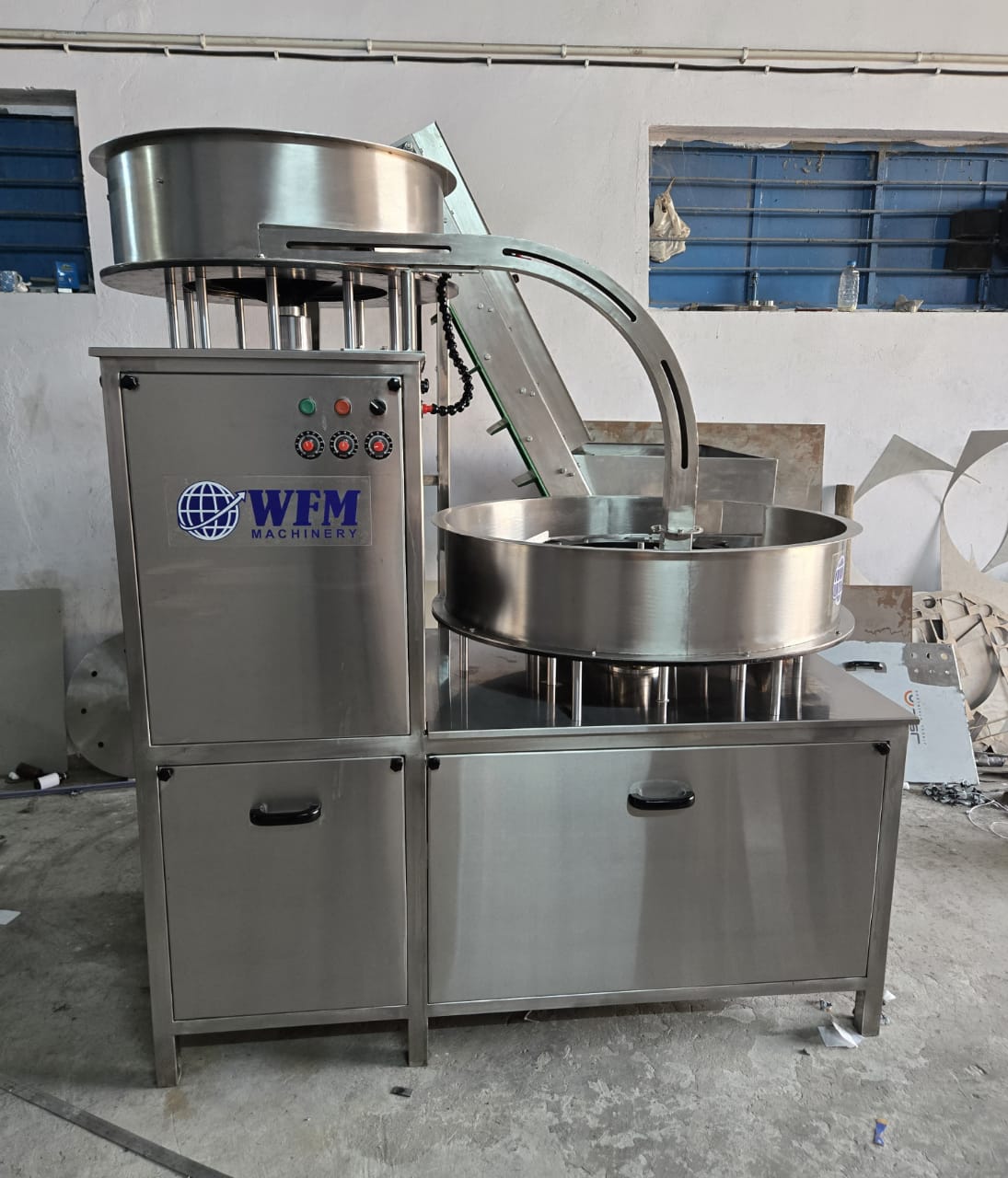
While many manufacturers initially focus on filling and capping machines, the bottle feeding stage plays a crucial role in maintaining continuous production flow. Upgrading from manual or semi-automatic bottle loading to a fully automatic bottle feeding system significantly improves productivity, reduces labor dependency, and enhances overall operational efficiency.
This article explains how to evaluate the return on investment (ROI) of installing an automatic bottle feeding system and why it is a strategic long-term decision.
Understanding the Role of Bottle Feeding in Production Efficiency
In any bottling line, the bottle feeding stage determines whether downstream equipment operates smoothly or experiences frequent interruptions.
Manual feeding typically involves:
-
Labor placing bottles onto conveyors
-
Irregular bottle orientation
-
Frequent misalignment
-
Inconsistent feeding rate
-
High operator fatigue
These inefficiencies directly reduce line output and increase operational costs.
An automatic bottle feeding system eliminates these limitations by providing:
-
Continuous bottle orientation
-
Stable discharge
-
Synchronization with filler
-
Reduced downtime
-
Minimal manual intervention
The improvement in line stability alone can significantly impact production output.
Key ROI Factors to Consider
Return on investment should not be calculated solely on machine cost. It must consider multiple operational parameters.
Labor Cost Reduction
Manual feeding requires multiple operators per shift.
For example, if a plant requires 2 operators per shift for bottle loading:
-
3 shifts per day
-
6 operators total
-
Monthly labor cost per operator
When calculated annually, labor expenses become substantial.
An automatic bottle feeding system drastically reduces or eliminates manual feeding labor.
Even if one operator remains for supervision, overall labor cost drops significantly.
This alone often justifies the investment within a short period.
Increased Production Output
Manual bottle loading limits line speed.
For example:
-
Filling machine capacity: 5000 BPH
-
Manual feeding capability: 3500–4000 BPH
This mismatch results in underutilization of expensive filling equipment.
By installing an automatic rotary bottle feeding system:
-
Bottles are fed at consistent high speed
-
Filler operates at full capacity
-
Production volume increases
Even a 15–20% increase in output can generate substantial additional revenue annually.
Reduced Downtime and Line Stoppages
Manual feeding leads to:
-
Bottle pile-ups
-
Misalignment
-
Conveyor jams
-
Frequent stoppages
Each minute of downtime in a high-speed bottling plant translates into lost production.
An automatic bottle feeding system:
-
Synchronizes with downstream machines
-
Detects jams through sensors
-
Maintains steady bottle flow
Reduced downtime improves overall equipment effectiveness (OEE).
Lower Bottle Damage and Rejection Rate
Manual handling increases:
-
Bottle scratches
-
Deformation (especially lightweight PET)
-
Improper orientation
-
Higher rejection rates
Automatic rotary systems are engineered for controlled handling, minimizing bottle damage and reducing wastage.
Reduced rejection directly improves profit margins.
Improved Workplace Safety
Manual bottle loading can cause:
-
Repetitive strain injuries
-
Fatigue
-
Slips in wet environments
-
Operational accidents
Automation reduces physical strain and improves plant safety compliance.
Safer operations mean fewer disruptions and reduced liability risks.
Example ROI Calculation Scenario
Let us consider a mid-sized edible oil plant.
Current Setup:
-
Production capacity: 4000 BPH
-
Manual bottle feeding with 2 operators per shift
-
3 shifts per day
-
Average operator salary per month
Annual labor cost = (2 operators × 3 shifts × salary × 12 months)
Add:
-
Production loss due to downtime
-
Underutilization of filler capacity
-
Bottle rejection cost
After installing automatic bottle feeding system:
-
Reduced to 1 operator per shift
-
Increased effective speed to 4500–5000 BPH
-
Reduced downtime by 10–15%
-
Lower rejection rate
Total annual savings often exceed a significant portion of the machine cost.
In many medium-speed plants, ROI can be achieved within 12–18 months depending on production volume.
Long-Term Financial Benefits
Beyond immediate cost recovery, automation offers long-term gains.
Consistent production stability
Scalable operations for expansion
Improved brand reliability due to reduced packaging defects
Better production planning
Higher equipment lifespan due to reduced stress
These long-term advantages compound over years.
Competitive Advantage Through Automation
In industries such as beverages, edible oils, cosmetics, and chemicals, production efficiency directly affects pricing competitiveness.
Plants with stable automation:
-
Produce more at lower operational cost
-
Meet higher demand without additional manpower
-
Deliver consistent packaging quality
Automation is not just cost-saving — it strengthens market position.
When Does Installing an Automatic Bottle Feeding System Make Sense?
Installation becomes highly beneficial when:
-
Production exceeds 2000–3000 BPH
-
Multiple shifts operate daily
-
Labor costs are rising
-
Downtime is frequent
-
Line expansion is planned
-
Product demand is increasing
In such scenarios, automation significantly enhances operational performance.
Mistakes to Avoid When Evaluating ROI
Do not:
-
Focus only on machine purchase price
-
Ignore hidden labor costs
-
Underestimate downtime losses
-
Overlook long-term scalability
-
Choose under-capacity systems
ROI must be evaluated strategically.
ROI from WFM Machinery Perspective
At WFM Machinery, we advise manufacturers to evaluate automation investments based on long-term operational efficiency rather than short-term capital cost.
Our automatic rotary bottle feeding systems are designed to:
-
Match high-speed filling lines
-
Reduce labor dependency
-
Maintain continuous synchronized feeding
-
Minimize bottle damage
-
Improve overall line productivity
Every installation begins with a technical assessment of production capacity, bottle type, and expansion plans.
This ensures the selected configuration delivers measurable operational and financial returns.
Final Conclusion
Installing an automatic bottle feeding system is not merely a machinery upgrade — it is an operational optimization strategy.
When properly configured, it delivers:
-
Labor cost reduction
-
Increased production output
-
Lower downtime
-
Reduced rejection rate
-
Improved plant safety
-
Strong return on investment
For medium to high-speed bottling plants, automation at the bottle feeding stage often becomes one of the most impactful improvements in overall production efficiency.
Manufacturers planning capacity expansion or facing frequent line inefficiencies should evaluate this investment carefully.
For technical consultation and ROI evaluation based on your specific production requirements, WFM Machinery can assist in analyzing your current setup and recommending the most suitable automatic bottle feeding solution.