
In modern bottling operations, production efficiency begins at the very first stage of the packaging line — bottle feeding. An automatic rotary bottle unscrambler plays a critical role in ensuring smooth, continuous, and correctly oriented bottle supply to the filling machine.
Selecting the wrong machine can result in frequent stoppages, bottle jams, inconsistent feeding, and reduced overall equipment efficiency (OEE). On the other hand, selecting the right automatic rotary bottle unscrambler improves throughput, reduces manual handling, and ensures long-term operational stability.
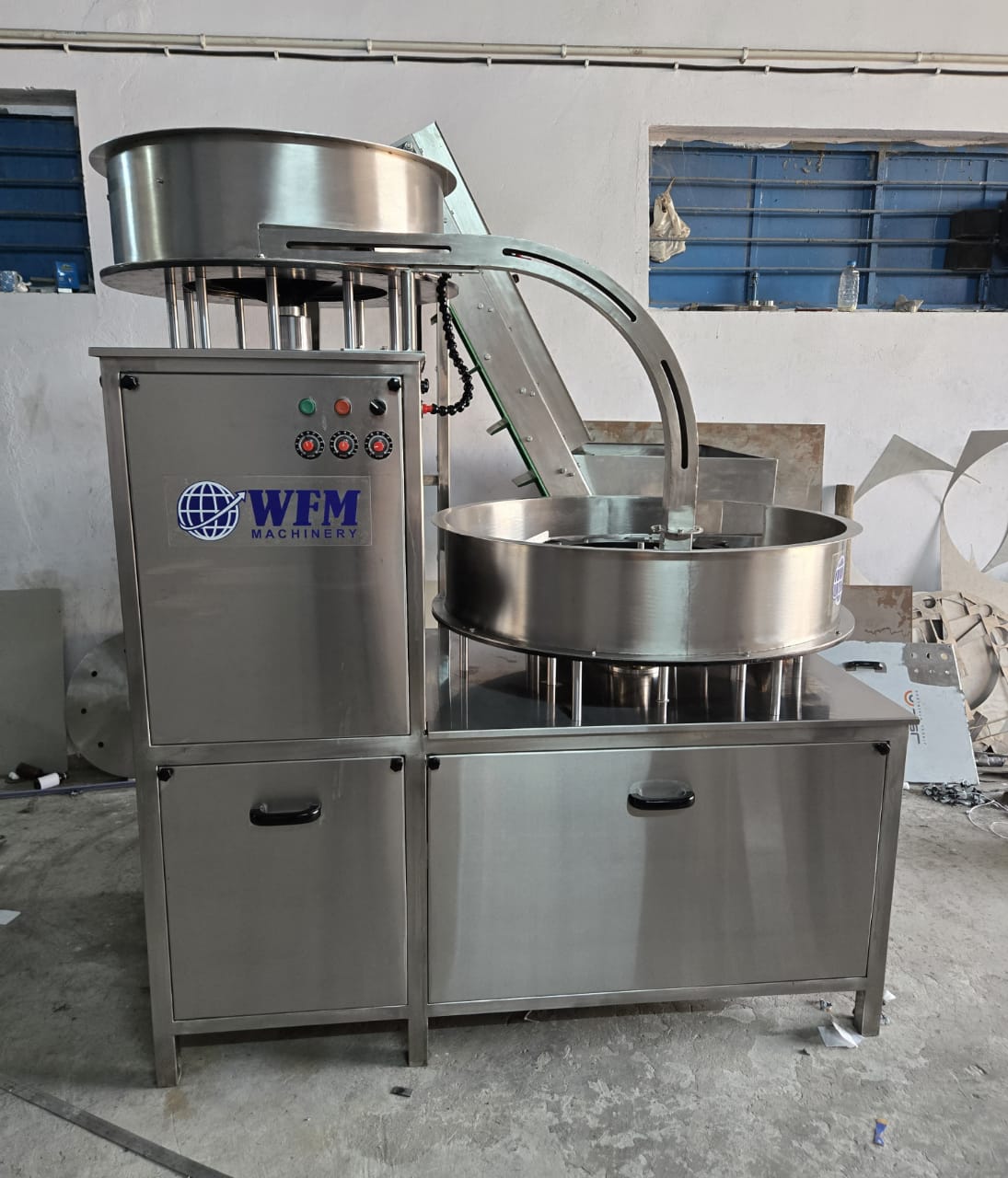
At WFM Machinery, we work with beverage, edible oil, pharmaceutical, cosmetic, and chemical manufacturers to design and supply fully automatic rotary bottle unscrambling systems suited to their production needs. This comprehensive guide explains how to select the right system for your plant.
Understanding the Role of an Automatic Rotary Bottle Unscrambler
Before selecting a machine, it is important to understand its function within the bottling line.
An automatic rotary bottle unscrambler performs the following:
-
Receives randomly loaded bottles
-
Separates and orients them in the correct upright position
-
Discharges bottles in a synchronized manner to the filling line
-
Maintains continuous feeding without manual intervention
In high-speed production environments, this system eliminates dependency on manual bottle placement and ensures consistent line performance.
If the bottle feeding system is unstable, the entire line suffers. Therefore, this is not an auxiliary machine — it is a core production component.
Match the Unscrambler Capacity with Your Line Speed (BPH)
The first and most critical selection factor is production speed.
Your automatic rotary bottle unscrambler must match or exceed your filler’s capacity in bottles per hour (BPH). If the unscrambler capacity is lower than the filling machine speed, it will create bottlenecks and reduce total line efficiency.
When evaluating speed requirements, consider:
-
Current filler capacity
-
Peak production demand
-
Planned future expansion
-
Shift-based production targets
-
Seasonal output fluctuations
For example:
-
2000–3000 BPH lines require medium-speed rotary systems
-
4000–6000 BPH lines require heavy-duty rotary systems
-
8000–10000+ BPH lines require high-performance automatic systems with stable discharge control
Never size the machine only for present capacity. Plan for future growth to avoid premature upgrades.
Analyze Bottle Specifications in Detail
Bottle design directly impacts the mechanical configuration of the unscrambler.
Before selecting a machine, define:
-
Bottle material (PET, HDPE, PP, etc.)
-
Bottle height range
-
Bottle diameter range
-
Neck finish type
-
Bottle weight
-
Base shape (flat, petaloid, dome-shaped)
-
Surface friction characteristics
Lightweight PET bottles, commonly used in beverage and edible oil industries, require gentle yet controlled handling. Improper orientation systems can deform bottles or cause unstable discharge.
Taller bottles require additional stabilization to prevent tipping during rotation and transfer.
At WFM Machinery, rotary systems are engineered to handle a wide range of bottle formats while maintaining orientation accuracy and minimal rejection.
Evaluate Automation and Control System
In modern manufacturing, full automation is no longer optional.
An ideal automatic rotary bottle unscrambler should include:
-
PLC-based control system
-
HMI touch interface for operator control
-
Variable frequency drive (VFD) speed control
-
Sensor-based bottle detection
-
Automatic jam detection and alarm system
-
Synchronization capability with filling machine
PLC integration allows speed coordination with downstream equipment. When the filler slows down or stops, the unscrambler adjusts automatically, preventing bottle pile-ups.
This level of automation reduces labor requirements and improves consistency.
Consider Changeover Requirements
If your production line handles multiple bottle sizes or SKUs, format flexibility becomes crucial.
Evaluate:
-
Changeover time between bottle sizes
-
Tool-less adjustment availability
-
Adjustable guide rails
-
Replaceable star wheels or orientation parts
-
Operator ease of handling
Frequent changeovers can significantly reduce productivity if the machine is not designed for quick adjustments.
Industries such as edible oil, cosmetics, and beverages often run multiple bottle sizes daily. A flexible system ensures smoother operations.
Assess Integration with Existing Bottling Line
An automatic rotary bottle unscrambler must integrate seamlessly with:
-
Air conveyor systems
-
Filling machines
-
Capping machines
-
Labeling machines
-
Accumulation tables
-
Conveyor networks
Poor integration can result in:
-
Bottle accumulation
-
Line stoppages
-
Misalignment
-
Increased downtime
Ensure the machine supports synchronization signals and smooth discharge alignment with existing conveyors.
At WFM Machinery, system design includes layout consultation to ensure optimal integration.
Examine Construction Quality and Durability
Industrial environments demand robust construction.
Inspect:
-
Stainless steel body construction
-
Structural rigidity of rotating platform
-
Heavy-duty drive systems
-
High-quality sensors and electrical components
-
IP-rated electrical panels
-
Safety guarding and interlocks
Continuous operation in bottling plants requires stable mechanical design. Weak construction leads to vibration issues and frequent maintenance.
Durability directly impacts return on investment.
Evaluate Space and Layout Constraints
Plant layout significantly influences machine selection.
Measure:
-
Available floor space
-
Ceiling height
-
Entry and discharge orientation
-
Maintenance access clearance
-
Power supply location
Compact rotary systems are suitable for space-limited facilities, but layout planning must consider future expansion possibilities.
WFM Machinery assists clients in evaluating layout compatibility before finalizing machine configuration.
Review Maintenance and Service Support
Machine reliability depends not only on design but also on support.
Confirm:
-
Spare part availability
-
Response time for service calls
-
Installation and commissioning assistance
-
Operator training support
-
Preventive maintenance schedule
Downtime in high-speed bottling plants is costly. Reliable service support ensures uninterrupted operations.
Calculate Total Cost of Ownership (TCO)
Many buyers focus only on initial machine cost. However, selection should be based on total cost of ownership.
Consider:
-
Labor cost reduction
-
Increased production capacity
-
Reduced downtime
-
Lower bottle damage rate
-
Improved line stability
-
Energy consumption
-
Maintenance frequency
In medium to high-speed lines, a properly engineered automatic rotary bottle unscrambler often recovers investment within a short operational cycle.
Common Mistakes to Avoid
During selection, avoid the following mistakes:
-
Choosing machine based solely on price
-
Ignoring future expansion plans
-
Underestimating required BPH
-
Overlooking bottle compatibility
-
Selecting semi-automatic systems for high-speed lines
-
Ignoring integration requirements
Improper selection leads to operational inefficiencies and long-term losses.
Industry-Specific Considerations
Different industries have unique requirements.
In beverage plants, lightweight PET bottles require gentle orientation and high-speed discharge.
In edible oil packaging, stable bottle handling is necessary to prevent spillage risk.
In cosmetics, frequent size changes demand quick changeover mechanisms.
In pharmaceutical applications, precision and hygiene standards are critical.
An experienced manufacturer understands these variations and configures systems accordingly.
Future Scalability and Upgrade Options
A good investment should allow scalability.
Check whether the system allows:
-
Speed upgrades
-
Bottle size expansion
-
Automation enhancements
-
Integration with robotic loading
-
Advanced monitoring features
Future-ready systems protect your long-term production goals.
Final Recommendation from WFM Machinery
Selecting an automatic rotary bottle unscrambler is a strategic production decision, not just a machinery purchase.
At WFM Machinery, we recommend evaluating every installation based on:
-
Actual and projected production capacity
-
Detailed bottle specifications
-
Automation level requirements
-
Integration with existing systems
-
Layout constraints
-
Long-term operational efficiency
Every bottling plant has unique challenges. A standardized approach rarely delivers optimal results.
Our engineering team works closely with manufacturers to analyze production requirements, assess layout conditions, and recommend customized automatic rotary bottle unscrambling solutions designed for stable, high-speed performance.
If you are planning a new bottling line or upgrading an existing one, a technical consultation can help determine the correct machine configuration and capacity.
For detailed technical discussion or production assessment, WFM Machinery can assist you in selecting the most suitable automatic rotary bottle unscrambler for your application.