
When a manufacturer starts searching for a liquid filling machine, the most critical decision is whether to choose an automatic or semi-automatic system. This decision affects production speed, manpower cost, consistency, and long-term scalability.
A wrong choice can either limit your growth or lock unnecessary capital into a system you are not ready to utilize. A correct choice ensures smooth production and better returns from day one.
Core Difference That Matters to Buyers
A semi-automatic filling machine operates with partial manual involvement. Bottles are placed by the operator, and the filling process is controlled manually or through a simple mechanism.
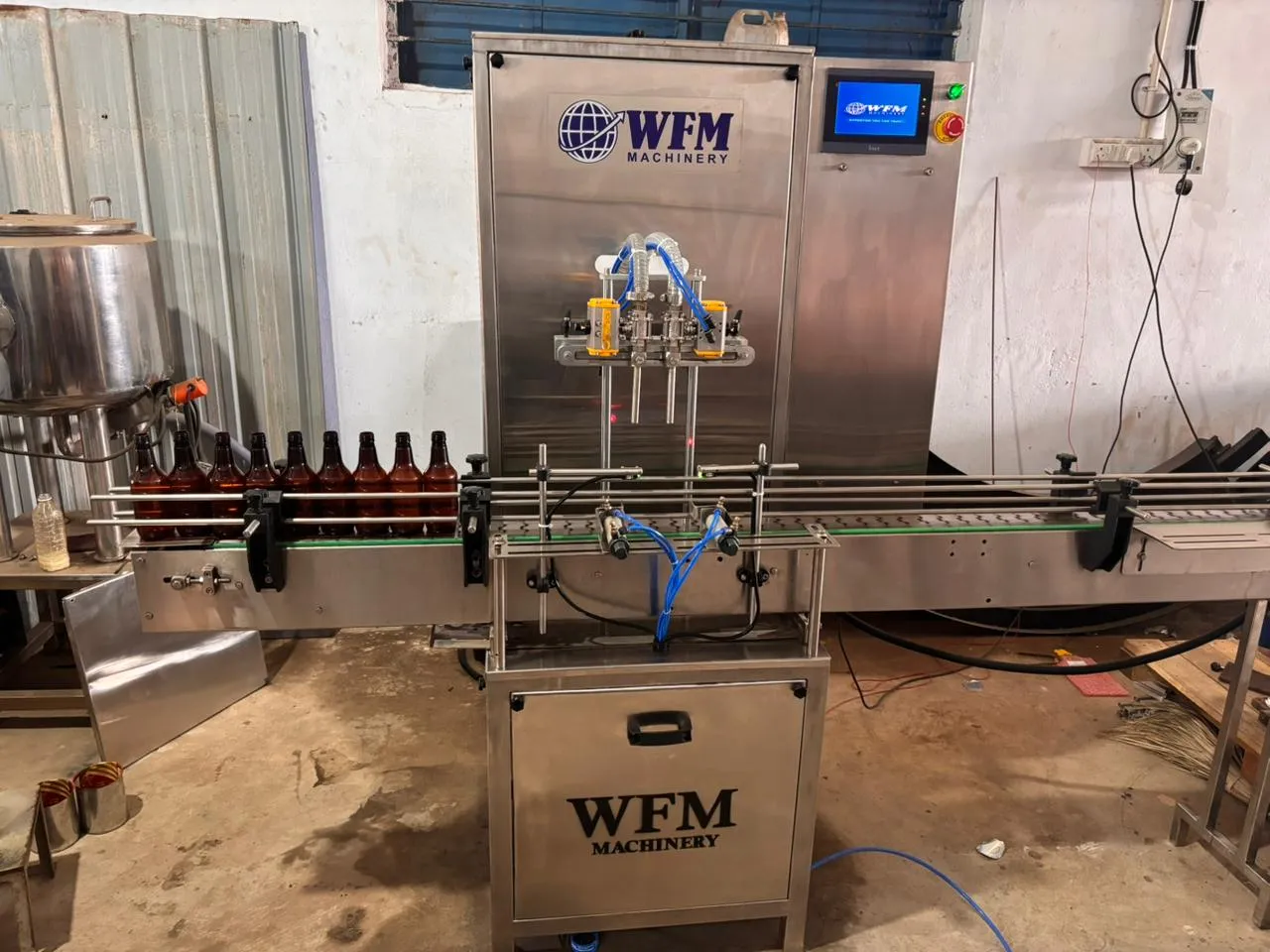
An automatic filling machine runs continuously with minimal human involvement. Bottles move through a conveyor, filling happens automatically, and output remains consistent throughout production.
The real difference is not just automation, but how efficiently your production line performs under demand.
Practical Comparison for Decision Making
| Factor | Semi-Automatic Filling Machine | Automatic Filling Machine |
|---|---|---|
| Investment | Lower initial cost | Higher upfront investment |
| Output | Moderate production | High continuous production |
| Labor | Requires operator involvement | Minimal manpower |
| Accuracy | Consistent | Highly precise and uniform |
| Flexibility | Suitable for multiple products | Better for standardized production |
| Scalability | Limited | High scalability |
| Best Use | Small to medium production | Large and growing production |
When a Semi-Automatic Machine Is the Right Choice
A semi-automatic machine is ideal when you want controlled investment and operational flexibility.
It works best if:
- You are starting a new manufacturing unit
- Your production is batch-based or limited
- You handle multiple liquids such as oil, phenyl, syrups, or chemicals
- You want to test market demand before scaling
- You prefer lower initial investment
This is where most manufacturers begin before expanding.
When an Automatic Machine Becomes Necessary
An automatic machine becomes the right choice when production demand increases and consistency becomes critical.
It is suitable when:
- Your daily production demand is high
- You want to reduce labor dependency
- You require uniform filling across large batches
- You are supplying to distributors or large markets
- You are planning long-term expansion
At this stage, speed and reliability directly impact your profitability.
Cost Perspective Buyers Should Understand
Semi-automatic machines require lower investment but involve manpower and limited output.
Automatic machines cost more initially but provide:
- Higher production capacity
- Reduced labor cost
- Better consistency
- Lower long-term operational cost
For growing businesses, automatic machines often deliver better returns over time.
Industry-Based Recommendation
Different industries follow different paths based on demand and compliance.
- Oil and lubricant manufacturers often start with semi-automatic systems and upgrade later
- Phenyl and chemical manufacturers prefer semi-automatic machines for flexibility in early stages
- Pharmaceutical and syrup manufacturers generally move towards automatic systems for hygiene and consistency
- Thinner and solvent industries require automation with safety features for secure handling
Common Mistakes Buyers Make
Many buyers either invest too little or too early.
- Buying a low-cost machine and replacing it within a short time
- Investing in a high-end automatic system without sufficient production demand
Both situations increase cost instead of improving efficiency.
What Experienced Buyers Do Differently
Experienced buyers evaluate:
- Current production requirement
- Expected growth over the next one to two years
- Nature of the liquid being filled
- Total operational cost, not just machine price
This approach ensures the machine supports business growth rather than restricting it.
Why WFM Machinery
WFM Machinery provides filling solutions based on actual production needs.
Machines are selected considering:
- Liquid type such as oil, thinner, phenyl, syrups, or chemicals
- Required output and production scale
- Safety requirements for volatile liquids
- Compliance needs for pharma and hygiene-sensitive products
This ensures you invest in a system that performs reliably over time.
Final Decision Approach
- Choose semi-automatic if your priority is flexibility and lower investment
- Choose automatic if your priority is speed, consistency, and scale
- Choose based on where your business will be in the next one to two years, not just today
Next Step
If you are comparing machines, the right way forward is to get a configuration based on your actual requirement.
Share your product type, filling volume, and daily production target to receive a suitable machine recommendation along with configuration details and a competitive quotation.
A correctly selected filling machine improves efficiency, reduces wastage, and supports long-term business growth.