
A Practical Framework to Help You Invest Smartly and Avoid Costly Mistakes
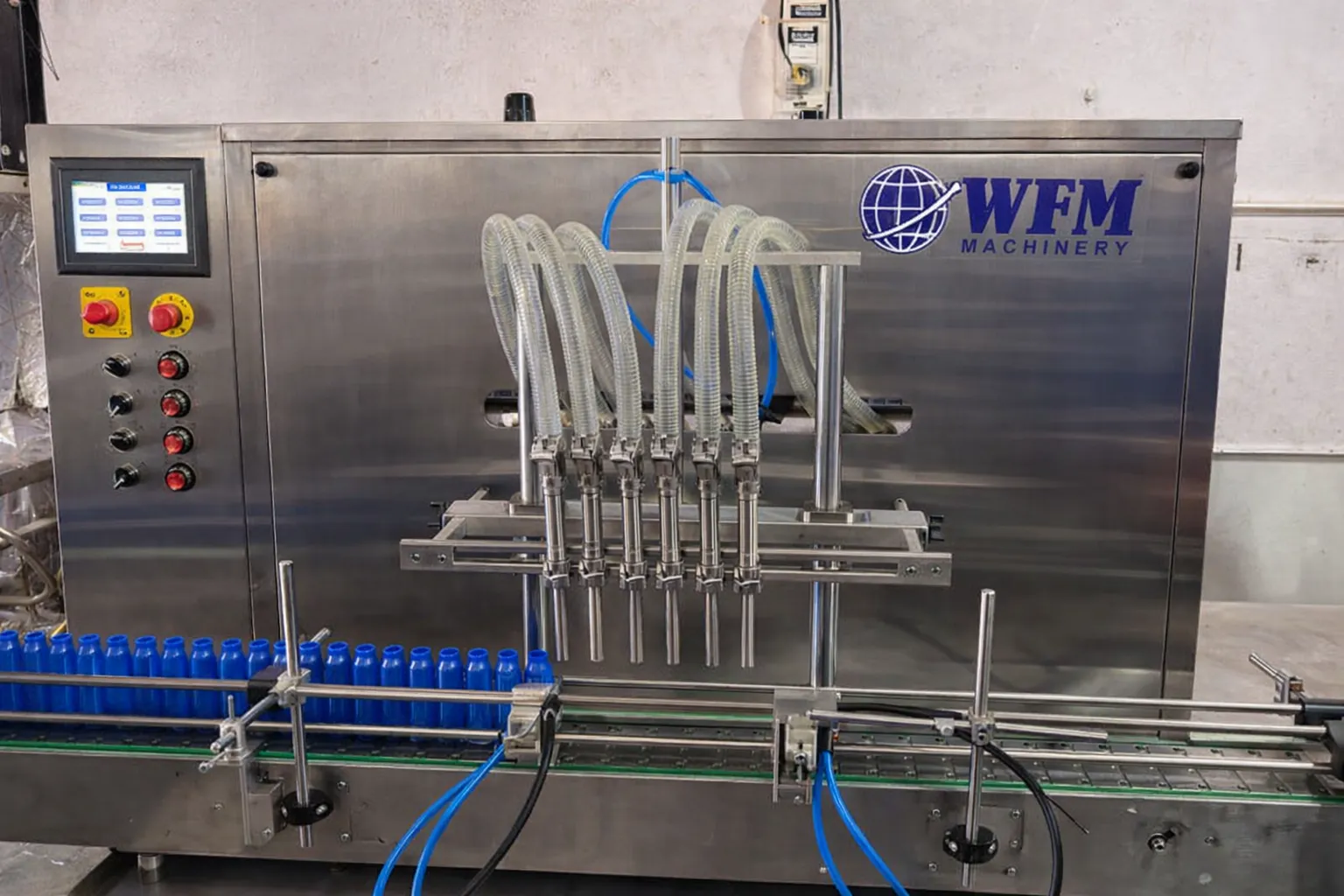
If you are planning to buy a filling machine for edible oil, this decision will directly affect your production cost, fill accuracy, operational stability, and long-term profitability.
Many buyers make expensive mistakes because they:
-
Choose based only on machine price
-
Focus only on speed
-
Ignore long-term product wastage
-
Do not calculate total operating cost
-
Do not plan for future expansion
This guide is written to help you make a safe, informed, and financially sound investment decision.
1. Start With Your Production Reality
Before comparing machines, clearly define:
-
Your daily production target
-
Bottles per minute requirement
-
Bottle sizes such as 100 ml, 500 ml, 1 L, 5 L, or 15 L
-
Number of SKUs you plan to handle
-
Current labor availability
-
Budget range
-
Future growth plan
A machine that fits today but blocks expansion tomorrow becomes expensive.
2. Understand Edible Oil Filling Challenges
Edible oil may look simple to fill, but it has specific characteristics:
-
Free-flowing but more viscous than water
-
Prone to splash at higher speeds
-
Requires hygienic contact surfaces
-
Packed in many container types
If the wrong technology is chosen, you may face:
-
Product wastage
-
Overfilling
-
Inconsistent volume
-
Spillage
-
Frequent recalibration
Understanding these risks helps you avoid poor investment decisions.
3. Choosing the Right Filling Technology
For edible oil, two main technologies are commonly used.
Flow Meter Filling Machines
Flow meter systems measure oil electronically as it flows and stop filling at the programmed volume.
Advantages:
-
High accuracy for thin liquids
-
Excellent performance at higher speeds
-
Digital volume setting
-
Reduced product giveaway
Best suited for buyers focused on precision and medium to high production output.
Piston Filling Machines
Piston systems draw a fixed volume mechanically and dispense it into the bottle.
Advantages:
-
Strong volumetric consistency
-
Suitable when oil viscosity varies
-
Reliable mechanical design
Best suited for buyers needing flexibility and moderate production speed.
Quick Comparison
| Factor | Flow Meter System | Piston System |
|---|---|---|
| Accuracy for edible oil | Excellent | Very good |
| Speed capability | High | Moderate to high |
| Volume adjustment | Digital | Mechanical |
| Maintenance | Sensor calibration | Seal and piston wear |
| Best suited for | High-output lines | Flexible operations |
4. Why Accuracy Directly Protects Your Profit
Overfilling destroys margins quietly.
If you overfill by just 1 ml per bottle
and produce 20,000 bottles per day
You lose 20 liters daily.
Over 300 working days, that becomes 6,000 liters per year.
Multiply that by your oil cost per liter and you see the financial impact.
Accurate filling systems help you:
-
Maintain declared volume
-
Reduce unnecessary overfill
-
Stay within compliance limits
-
Stabilize annual margins
Always ask suppliers about real fill tolerance consistency under continuous operation.
5. Semi-Automatic vs Automatic Systems
Semi-Automatic Filling Machines
-
Lower initial cost
-
Manual bottle placement
-
Suitable for smaller production
-
Higher labor dependency
Ideal for startups or controlled production scale.
Automatic Filling Machines
-
Conveyor-based movement
-
Reduced operator dependency
-
Higher output
-
Easier integration with capping and labeling
Better suited for scaling businesses and multi-shift production.
Your choice should depend on daily output and labor economics, not just purchase cost.
6. Container Compatibility
Edible oil packaging varies widely:
-
PET bottles
-
HDPE bottles
-
Glass bottles
-
Jerrycans
-
Tin containers
Your machine must provide:
-
Adjustable bottle guides
-
Stable bottle positioning
-
Suitable nozzle length
-
Easy changeover between sizes
Poor bottle handling leads to spillage and wasted product.
7. Integration With Complete Packaging Line
A complete edible oil line often includes:
-
Bottle feeding system
-
Filling machine
-
Capping machine
-
Induction sealing system
-
Labeling machine
-
Coding system
-
Conveyors
Ensure the filling machine supports smooth integration. Otherwise, future upgrades will cost more.
8. Cleaning and Hygiene
Even though oil is less sticky than syrup, hygiene is still critical.
Look for:
-
Food-grade stainless steel contact parts
-
Smooth internal liquid pathways
-
Easy nozzle removal
-
Minimal dead zones
Better cleaning design reduces downtime and contamination risk.
9. Total Cost of Ownership
Never compare machines only by initial price.
Evaluate:
-
Product wastage reduction
-
Labor savings
-
Maintenance cost
-
Energy usage
-
Downtime impact
-
Scalability
A slightly higher investment in accuracy often saves much more over time.
10. Warranty and After-Sales Support
Before finalizing your purchase, confirm:
-
Warranty coverage details
-
Spare parts availability
-
Installation support
-
Operator training
-
Technical service response time
Reliable after-sales support is essential for stable operations.
Frequently Asked Questions
Which filling machine is best for edible oil?
Flow meter systems are generally preferred for thin edible oils due to high accuracy, while piston systems offer flexibility if viscosity varies.
Is automatic filling necessary for 10,000 bottles per day?
Not mandatory, but automation improves consistency and reduces long-term labor cost.
Can one machine handle multiple bottle sizes?
Yes, provided it has adjustable guides and quick-change mechanisms.
How much fill accuracy is acceptable for edible oil?
Accuracy should stay within tight tolerance limits without constant recalibration, minimizing both overfill and underfill.
Does a higher price mean better accuracy?
Not always, but advanced control systems like servo or flow meter technology usually provide better consistency.
How do I calculate ROI before buying?
Estimate current product overfill per bottle, multiply by daily production and cost per liter, and compare that loss with machine investment.
What maintenance should I expect?
Flow meter systems require calibration checks, while piston systems require periodic seal replacement.
Will a cheaper machine cost more later?
It can, especially if it causes product giveaway, downtime, and frequent adjustments.
Final Buyer Perspective
A filling machine for edible oil is a long-term operational investment.
The right system:
-
Reduces product wastage
-
Stabilizes production
-
Lowers labor dependency
-
Protects profit margins
-
Supports growth
Before investing, calculate:
Your daily output
Your oil cost per liter
Your current overfill percentage
Your acceptable tolerance
Your expansion plan
When accuracy, scalability, and service support align with your goals, your filling machine becomes a profit-protecting asset rather than a recurring expense.
If you share your production target and bottle sizes, a more tailored recommendation can be structured to match your exact requirements.