
If you are planning to invest in a liquid filling machine, one major decision will directly impact your production efficiency, manpower cost, and long-term scalability:
Should you choose an Automatic or a Semi-Automatic filling machine?
This guide breaks down the confusion using clear comparisons, practical scenarios, structured tables, and FAQs so you can make a confident and financially sound decision.
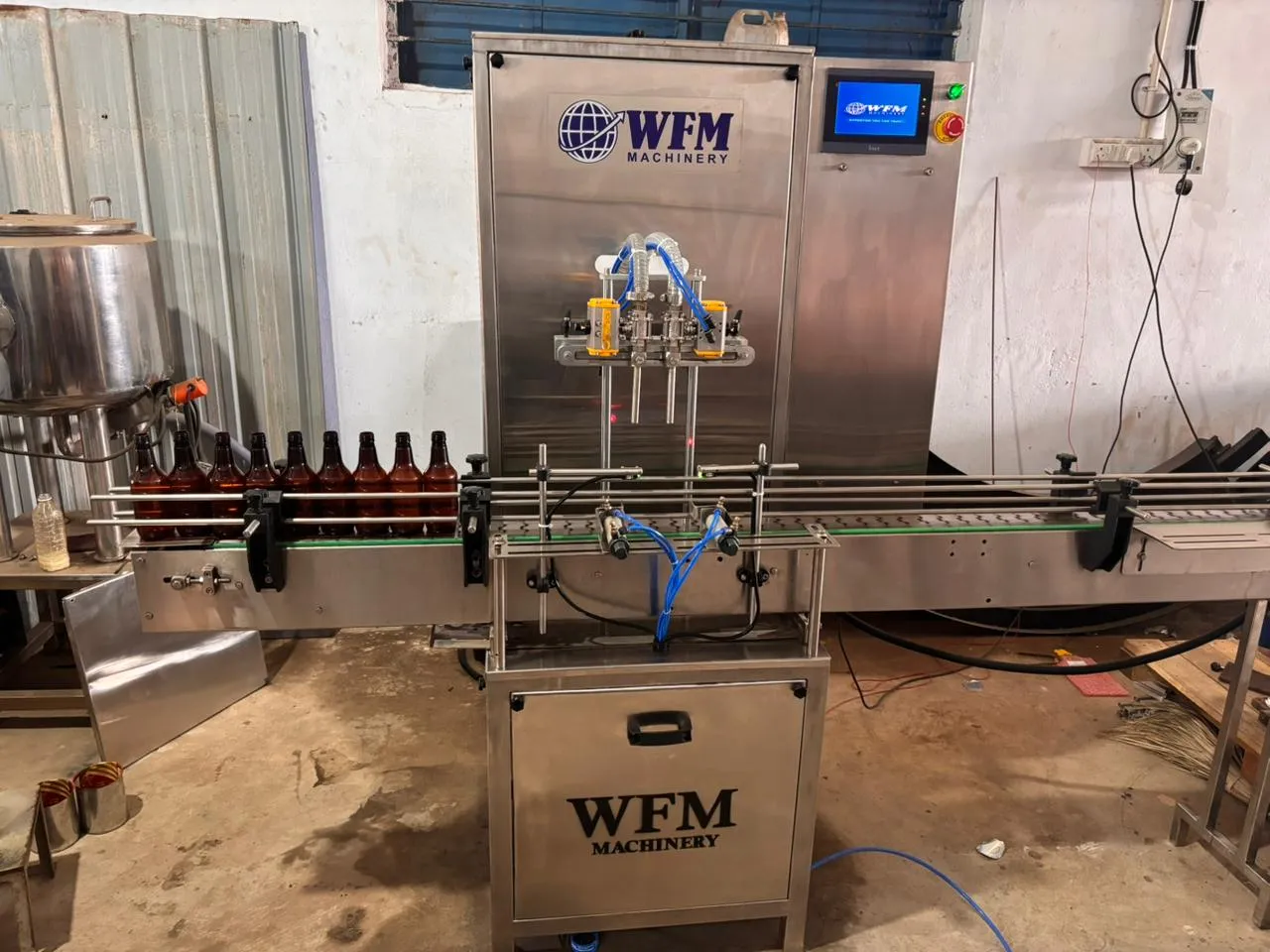
Quick Overview – Core Difference
-
Semi-Automatic Filling Machine → Manual bottle placement with automated filling cycle
-
Automatic Filling Machine → Conveyor-based system with fully automated bottle movement and filling
The real difference lies in production capacity, labor dependency, and growth potential.
Side-by-Side Comparison
| Parameter | Semi-Automatic Filling Machine | Automatic Filling Machine |
|---|---|---|
| Bottle Handling | Manual placement by operator | Automatic via conveyor |
| Production Speed | Moderate | High |
| Manpower Requirement | Higher | Lower |
| Initial Investment | Lower | Higher |
| Changeover Time | Manual adjustments | Faster, often programmable |
| Scalability | Limited | High |
| Best For | Startups, small batches | Growing & high-volume plants |
| Integration | Standalone operation | Integrated packaging lines |
| Long-Term ROI | Good for small scale | Strong for high volume |
Production Capacity – What Matches Your Output?
Choose Semi-Automatic If:
-
Your daily output is moderate
-
Production is not continuous
-
You run limited SKUs
-
Labor availability is stable
Choose Automatic If:
-
You operate multiple shifts
-
Demand is increasing consistently
-
You require higher bottles-per-minute output
-
You want uninterrupted production flow
If you expect production to grow within the next few years, automation prevents future bottlenecks.
Cost Perspective – Think Beyond Machine Price
Many buyers compare only purchase price. That is incomplete.
You should evaluate:
-
Annual labor cost
-
Production downtime
-
Output efficiency
-
Maintenance frequency
-
Expansion cost later
Semi-Automatic = Lower upfront investment
Automatic = Higher upfront investment but improved operational efficiency
If labor cost is rising in your region, automation often delivers stronger long-term savings.
Operational Advantages
Semi-Automatic Advantages
-
Lower capital requirement
-
Simple installation
-
Easy to operate
-
Flexible for small production batches
-
Suitable for compact facilities
Automatic Advantages
-
Higher production speed
-
Reduced operator dependency
-
Better production rhythm
-
Easy integration with capping and labeling
-
Supports scaling operations
Risk Analysis – Avoid Costly Mistakes
If You Choose Semi-Automatic When You Actually Need Automatic:
-
Production bottlenecks
-
Increased labor cost over time
-
Operator fatigue errors
-
Early reinvestment in automation
If You Choose Automatic Too Early:
-
Capital strain
-
Underutilized capacity
-
Slower ROI if demand is low
The correct choice balances current production with realistic growth planning.
Real-World Buyer Scenarios
Startup launching a new liquid product
Semi-automatic is typically a practical starting point.
Pharmaceutical manufacturer planning expansion
Automatic supports compliance and volume growth.
Cosmetic brand managing multiple SKUs
Automatic reduces changeover time and improves efficiency.
Regional food processor with stable production
Semi-automatic may be sufficient if output demand is controlled.
Frequently Asked Questions
Is filling accuracy different between automatic and semi-automatic?
Accuracy depends mainly on filling technology such as piston or servo systems. However, automatic machines maintain better bottle positioning consistency, improving overall production rhythm.
Can I upgrade from semi-automatic to automatic later?
Yes, but it may require additional investment in conveyors and integration systems. Planning long-term often reduces total cost.
How do I calculate if automation is worth it?
Compare annual labor cost, projected production growth, and output targets. If automation reduces labor and increases productivity significantly within a few years, it is justified.
Does automatic mean no operators?
No. Operators are still needed for supervision and quality control, but manpower requirement is reduced.
Which option gives faster return on investment?
For small and stable production, semi-automatic often gives quicker ROI.
For high and growing production, automatic delivers stronger long-term ROI.
Simple Decision Framework
Choose Semi-Automatic if:
-
You are entering the market
-
Production is moderate
-
Budget is limited
-
Growth projections are uncertain
Choose Automatic if:
-
Production demand is high
-
Expansion is planned
-
Labor cost is significant
-
You want a complete integrated packaging line
Final Buyer Insight
The smarter investment is not the cheaper one.
The smarter investment is the one aligned with your production roadmap.
Semi-automatic filling machines are excellent for controlled, small-scale operations.
Automatic filling machines are strategic investments for manufacturers focused on efficiency, scalability, and long-term growth.
If you share your product type, bottle size, daily output target, and expansion plan, a structured evaluation can clearly determine which system best supports your profitability and operational goals.